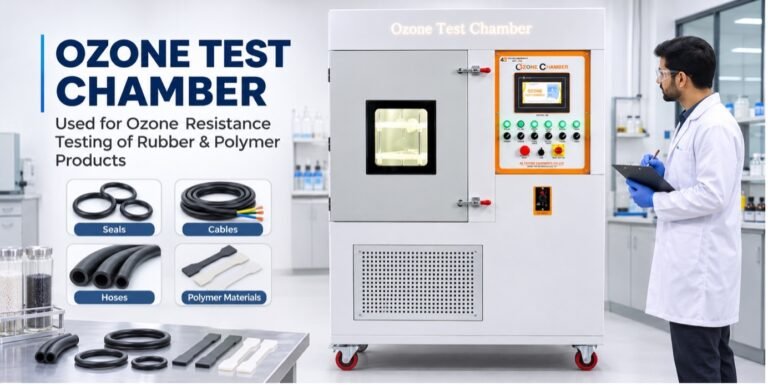
Sometimes you may have plastic films that look fine but tear in the customer’s packing unit a week later. Or rubber components may appear fine but crack when they are put under their first proper load. These failures are normally down to incorrect material properties being unmeasured.
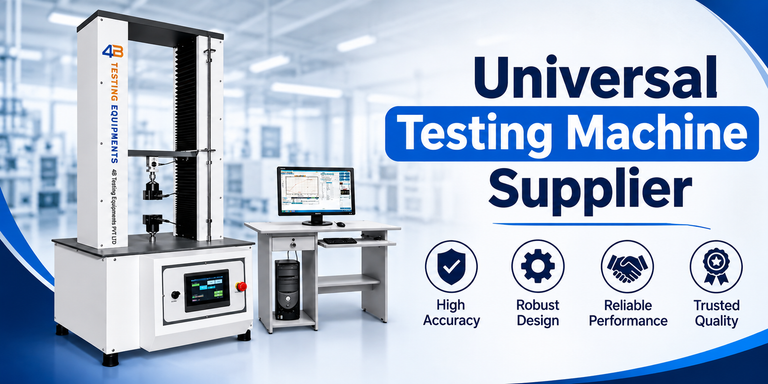
A Universal Testing Machine is key in most quality labs. The supplier you choose will affect how accurate and reliable your results are, how quickly you will get help and how long it will last you.
What is a Universal Testing Machine?
A Universal Testing Machine (UTM) puts a controlled force onto a sample to measure how it reacts to it. A motorised crosshead will move whilst the sample will be held in grips/fixtures and the force applied via a load cell. This will give information on how much load can be applied to the material, how much it will extend and where any failure occurs.
This type of equipment is known as universal as it can carry out multiple tests just by changing the fixtures. This makes it ideal for labs that will test multiple materials.
Types of tests carried out:
Tensile Testing
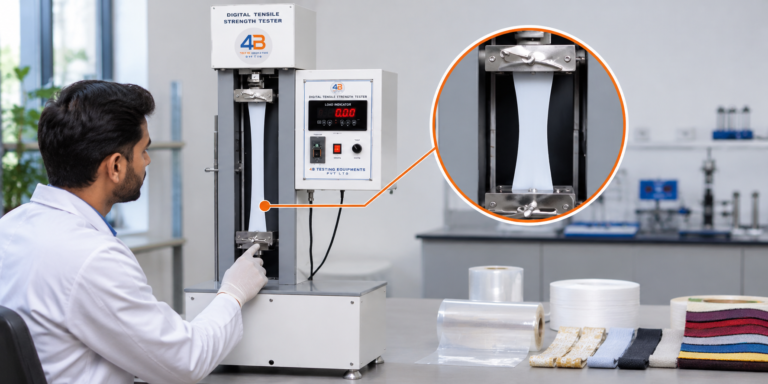
A sample will be stretched until it breaks. This will show you the tensile strength and behaviour when stretched. Tensile testing setups are the most common UTM use.
Compression Testing
A sample is put under pressure instead of stretched. This is important for packaging, foams and rubbers. Compression testing setups show how much compressive force a material can take.
Flexural/Bending Testing
A sample is placed between 2 points and force is applied to the middle. Plastics and similar materials are often tested using this method to show how stiff they are and when they will bend or break.
Elongation Testing
Elongation is the percentage a material will stretch before it breaks. This is usually taken from the tensile test and shows how flexible or brittle a material actually is.
Industries Using a Universal Testing Machine
Plastics/polymer – Films, Sheets, Moulded Components & Compounds
Rubber – Gaskets, Seals & Sheets
Paper/Packaging – Board, Laminates & Pouches
Textiles – Fabric Strength & Stretch Testing
Automotive – Small Plastic/Rubber Components, Trims & Fasteners
Quality Control Labs/Research – Incoming Material Testing, Batch Testing & Product Development
Key Considerations
A good Material Testing Equipment Supplier will ask questions about your samples. Ensure you think about:
- Accuracy – Quality Load Cell & Repeat Accuracy
- Capacity – Ensure you pick a range that fits your samples, don’t go for the largest one.
- Will you need to test anything else? – What tests do you currently carry out and what could you add in future?
- ASTM & ISO Standards – Ensure the machine can carry out the methods your customers will require.
- Digital/Computerised – Will you need just the load display or software, graphs & reports.
- Support – Who will install, train & answer questions.
- Calibration – A poor calibration process will affect all results.
When looking for UTMs in India, make sure to ask for answers to the above.
Why Choose 4B Testing Equipment Pvt. Ltd supply and manufacture testing equipment for laboratories and industrial units. Their Digital Universal Testing Machine can be used daily for testing plastics, rubbers, packaging & similar materials.
Key Features:
- 100kgf, 500kgf & 1000kgf
- Tensile, Compression & Flexural Testing
- High accuracy load cell with digital load display
- Motorised testing
Custom Grips & Fixtures depending on test & sample.
The 3 different capacities allow smaller QC labs and bigger production units to choose what will fit their samples. Custom fixtures will be useful if your product does not fit into standard grips. Full details can be found here.
FAQs
What is the main purpose of a Universal Testing Machine?
To measure the mechanical properties of a material, including strength, stretch & stiffness by applying a controlled force and measuring.
What types of materials can be tested?
Plastics, Rubbers, Paper, Packaging Films, Textiles, Metals & Composites can all be tested. You will need to ensure you have the right capacity and grips for your material.
What is the difference between digital & computerised UTM?
A digital UTM will have the readings on the display. A computerised UTM will connect to software to produce graphs, store results & print reports.
How do I know what capacity I need?
Work out what is the highest force you will need and add some extra. Very small samples on a very large machine may not give as accurate results.
What affects the price?
Capacity, Quality Load Cell, Software, Grips & Fixtures and Post Sales Support. Prices will vary so ask for a quotation based on your testing needs.
Choosing a Reliable Machine
Choosing the right Universal Testing Machine will give you accurate and reliable results. Ensure you are choosing a machine that can test your samples and to the correct standards. Choose a supplier who can offer support and calibration.
If you are looking at options, 4B Testing Equipment can be a good option to talk to. Tell them what you are testing and they can recommend the right setup.